The Smart Servings Plan
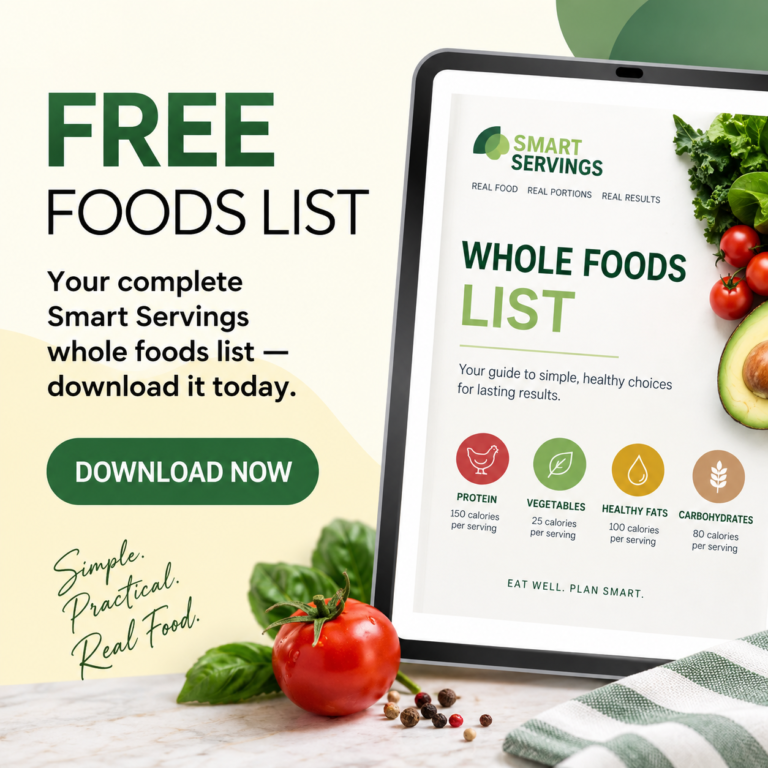
Smart Servings Whole Food List
Simple, real-food eating starts here. Download your free Smart Servings Food List and quick start guide.
Free Smart Servings System
A confirmation email will be sent
Download
No spam here. You will be on my newsletter list but you can unsubscribe anytime. :
- Whole Foods List with portions
- Vegetable weight sheet
- Quick start guide
- Journal page
#1. Finding Your Daily Calorie Needs
Most women can safely lose weight consuming between 1100 and 1400 calories per day, depending on current weight,age, and lifestyle. You don’t have to overthink it — simply begin with a calorie range that feels realistic and sustainable.
If you want a more personalized number, online calorie calculators can estimate your daily needs based on your current weight and activity level. The exact number isn’t as important as choosing a realistic target and staying consistent.
This is just a starting point. You can change this number based on your results. Stay consistent for 7 to 14 days first.
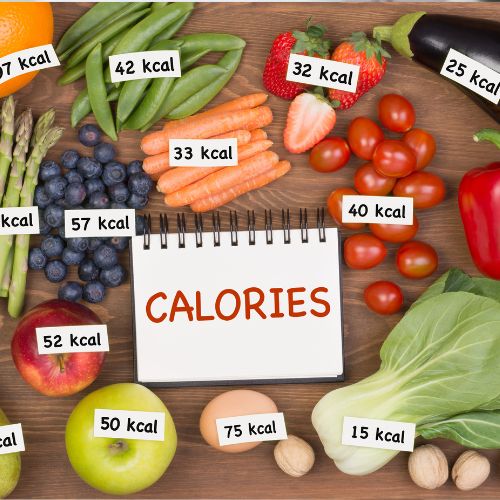
You can use an online calculator like TDEE to get a more accurate starting calorie target.
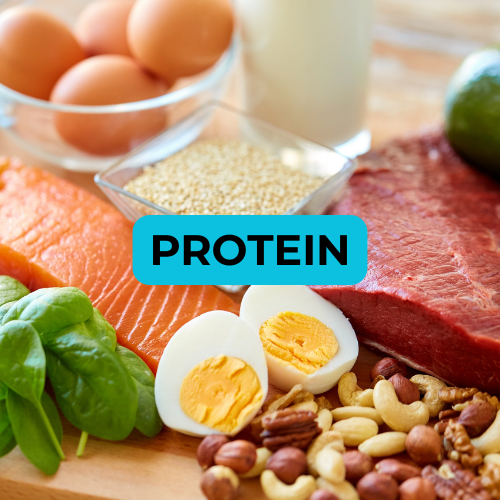
#2. Add in Your Protein Calories
The bulk of your calories will come from the protein list. A good starting point is 5 servings a day. Smart Servings is built on portions and each portion from the protein list averages 150 calories.
Protein is important when you are in calorie deficit, not only does it help keep you satisfied it is critical to support lean muscle.
Protein is the base of your calories. Don't skimp eating enough will improve your results.
#3. Add in Your Daily Vegetables
Now add your vegetables — Aim for 4 cups a day, Ideally get 2 cups at lunch and 2 cups at dinner.
Vegetables help control appetite, support gut health, and keep you satisfied without adding many calories. Each portion of vegetables that you choose from the food list averages 25 calories.
*Quick note — vegetables are technically a carb, but I give them their own category on the list because they’re non-negotiable. High volume, almost no calories, and they do a lot of the heavy lifting.
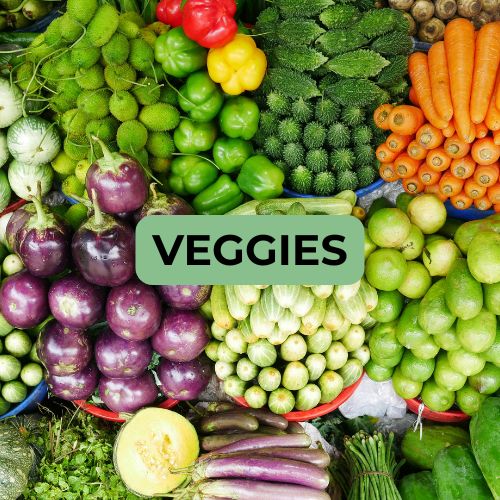
When you're eating less overall, every bite needs to work harder. Vegetables deliver the most nutrition for the fewest calories.
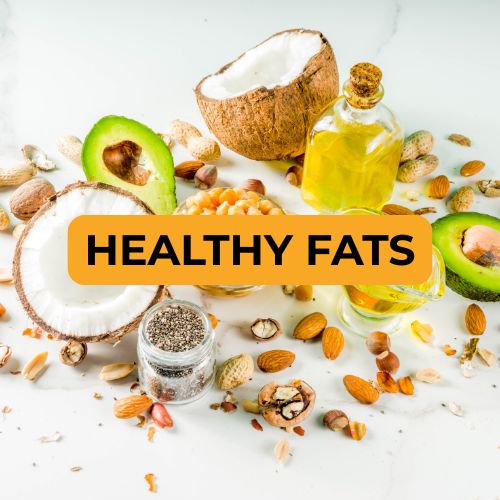
#4. Add in Your Healthy Fats
Next, add in your healthy fats. Most women will choose a minimum of 2/day, and each portion of fat from the food list averages 100 calories. Fat gives you steady energy, supports hormone balance, and makes meals more satisfying. Simply select from variety of choices on the approved list and measure it out — small amounts go a long way.
Examples: Olive oil, Butter, Cheese and Avocado.
Fats are essential — just in far smaller amounts than you're probably used to.
#5. Add in Your Carbs
By this point, you’ve likely used 1000–1100 calories between protein, vegetables, and healthy fats. The rest of your daily calories can come from carbs — things like whole-grain choices, fruit, or pasta.
Each portion on the food list averages 80 calories.
To hit 1200 calories add in 2 servings.
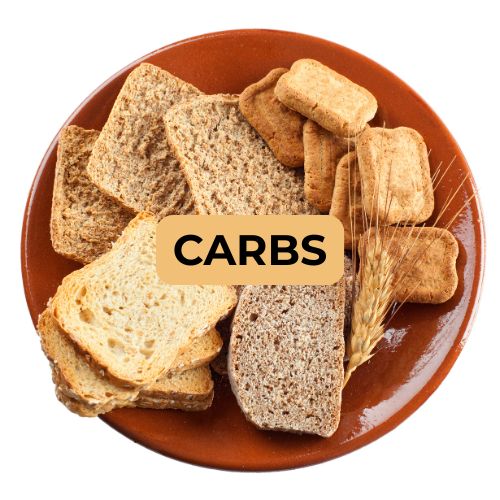
Carbs are not the enemy even on a low carb diet. Portions determine if they work for you or against you.
#6. Add in Extras
Extras are the small enjoyments you build into your plan — a treat, a special occasion, something you look forward to. You don’t need them every day, but when you do have one, it needs to be tracked. The easiest way: is to ask Google for the average calories and add it on your calorie total. Perfection isn’t the goal — consistency over time is what gives you results..
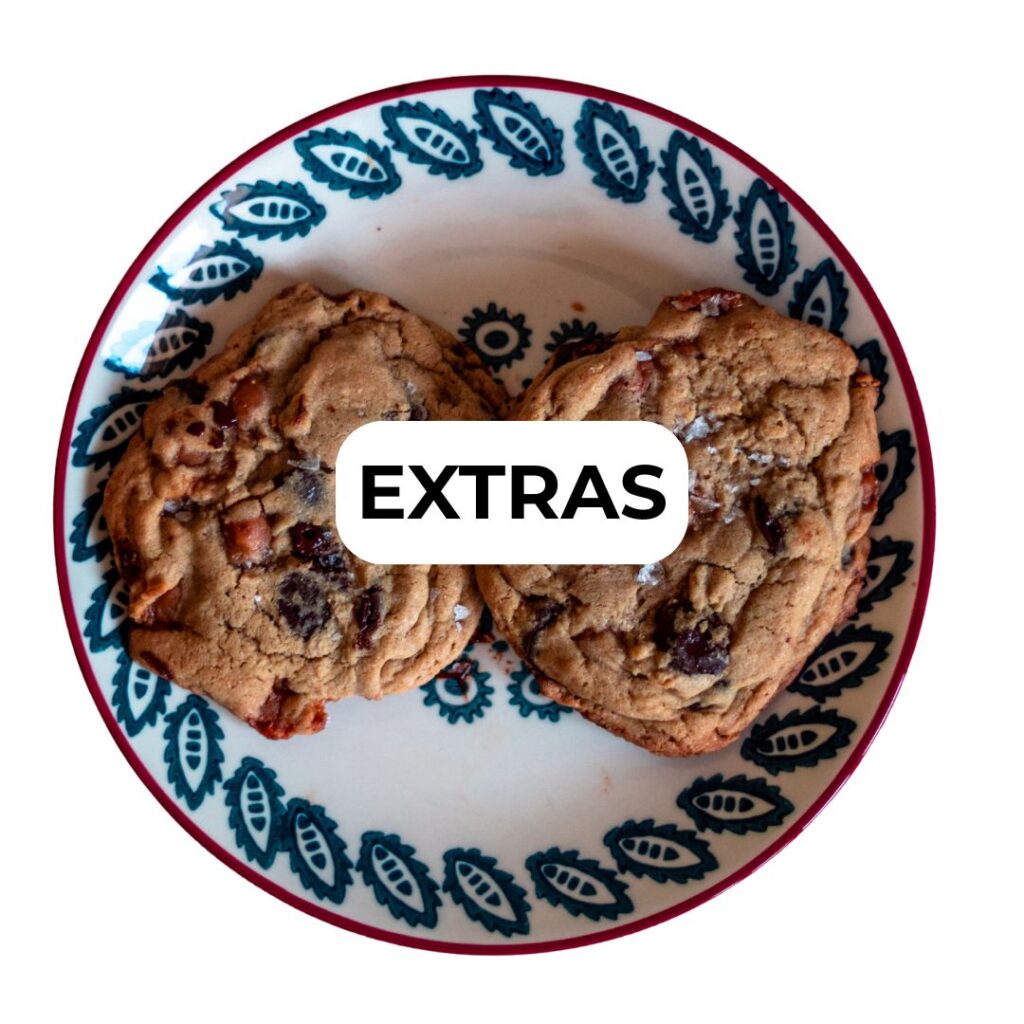
Extras add to your calorie count — they're not the foundation of your plan, but they won't break it either.
Personalize Your Plan With the Portion Calculator.
1. Enter your servings — add in your protein, vegetables, healthy fats, and carbohydrates based on the portions you calculated in the steps above.
2. Use the Extras field to add in your lifestyle layer calories — the flexible portion of your day for fats, carbs, or small treats.
3. Check your daily total — if it’s within your calorie target, you have your plan.
Now download the free Smart Servings Food List to know exactly what to eat from each food category. Every food includes its individual serving size — so you always know exactly how much to put on your plate. Also includes a simple calorie tracking sheet.
FREE DOWNLOAD
Smart Servings Whole Food List
Simple, real-food eating starts here. Download your free Smart Servings Food List and quick start guide.
Free Smart Servings System
A confirmation email will be sent
Download
You will receive my newsletter but don’t worry you can cancel anytime
